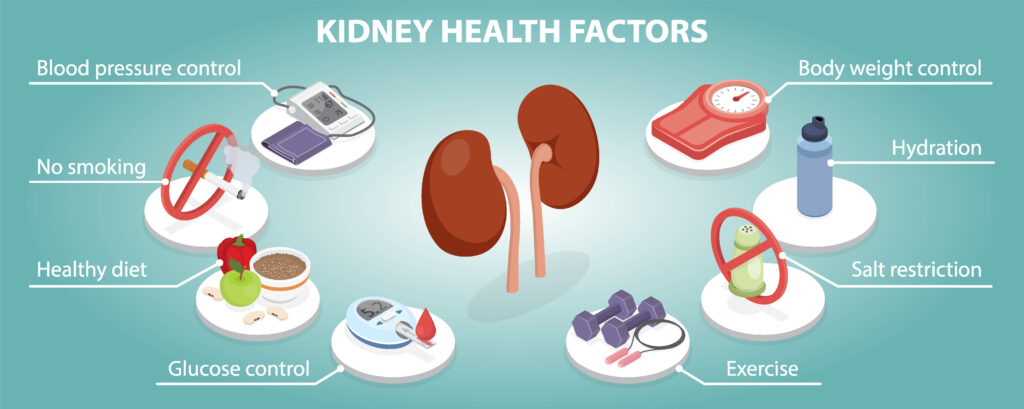
The kidneys are paired organs responsible for removing waste products, regulating fluid and electrolyte balance, controlling blood pressure and contributing to red blood cell production. Kidney problems range from acute, often reversible injuries to long‑term chronic kidney disease (CKD), and also include infections, stones and congenital or immune‑mediated disorders. CKD affects hundreds of millions of people worldwide, yet simple blood and urine tests can detect early disease long before symptoms appear.
Common conditions and how they present
- Acute kidney injury (AKI): a sudden decline in kidney function, often triggered by dehydration, infection, medication effects or obstruction. It may cause reduced urine output, fluid overload or abnormal blood tests and always requires prompt medical review.
- Chronic kidney disease (CKD): a gradual loss of kidney function that is frequently asymptomatic in its early stages. It is commonly associated with diabetes, high blood pressure and older age. Many people have no early symptoms, and CKD is often identified through routine blood tests (creatinine/eGFR) and urine tests (albumin).
- Urinary tract infections and pyelonephritis: infections may involve the bladder or ascend to the kidneys, causing pain, fever and systemic symptoms. Recurrent or severe infections warrant specialist assessment.
- Kidney stones: typically cause acute flank pain, blood in the urine and sometimes obstruction. Management ranges from pain control and observation to minimally invasive removal, depending on size, location and symptoms.
Assessment and investigation
Initial assessment usually includes a medical history, medication review, blood tests (serum creatinine/eGFR), urine testing for blood and protein, and blood pressure measurement. Imaging such as ultrasound or CT may be arranged when structural disease, stones or obstruction of the kidneys or bladder is suspected. In some cases, when surgical causes have been excluded, referral to a nephrologist (a medical kidney specialist) is appropriate for further evaluation and long‑term management.